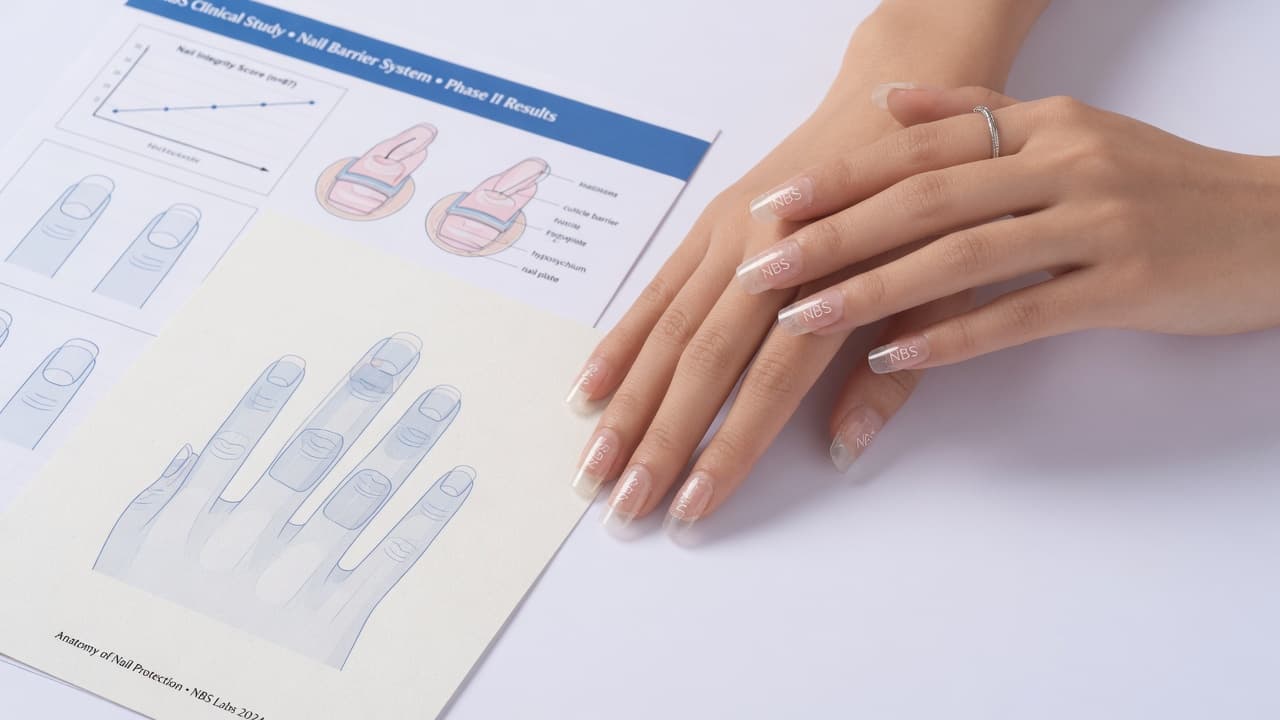
This article is part of the Nail-Biter Stoppers™ (NBS) blog — practical research and product insights for anyone ready to stop biting and start growing.
Nail biting, clinically known as onychophagia, is far more than a simple bad habit. It is a complex body-focused repetitive behavior (BFRB) that affects an estimated 20–30% of the global population. The NBS team has spent years studying this condition — both through personal experience and scientific research.
One of the most insightful resources that shaped our work is the 2008 study “Nail-biting, or onychophagia: A special habit” by Tanaka et al., published in the American Journal of Orthodontics and Dentofacial Orthopedics. In this post, we’ll break down key findings from that research, introduce our proprietary “latching” framework, and show how NBS™ provides a modern, practical solution.
Understanding Onychophagia: Causes and Prevalence
The Tanaka study defines onychophagia as a self-inflicted injury to the nails, strongly linked to psycho-emotional states. The habit typically begins between ages 3–4 and peaks during adolescence, often driven by stress, anxiety, boredom, or family imitation. While more common in boys during childhood, it becomes equally prevalent across genders by the teenage years. Incidence rates drop significantly after age 16.
Beyond appearance, the consequences can include:
- Dental issues (incisor malocclusion or mild root resorption)
- Secondary infections from damaged nail beds
- Permanent changes to the nail matrix and finger appearance
These risks highlight why early and effective intervention matters.
The Nail-Biting Habit Loop: Introducing the “Latching” Phase
The original study outlines a four-stage sequence of nail biting:
- Hands approaching the mouth
- Fingers tapping against the teeth
- Spasmodic biting
- Post-bite inspection
We have expanded this into a more complete habit loop that better explains why most traditional solutions fail:
- Trigger → Stress, boredom, or anxiety creates the urge
- Latching → The critical subconscious phase where the nail is positioned for contact
- Escalation → The actual biting session begins and can continue for minutes
- Relief + Regret → Temporary calm followed by damage and self-criticism
We call the early stages (hand-to-mouth movement and positioning) the “latching” phase. This is the pivotal moment when the urge becomes physical action. Most bitter polishes and awareness techniques fail because they only address the biting itself — after the latching has already occurred.
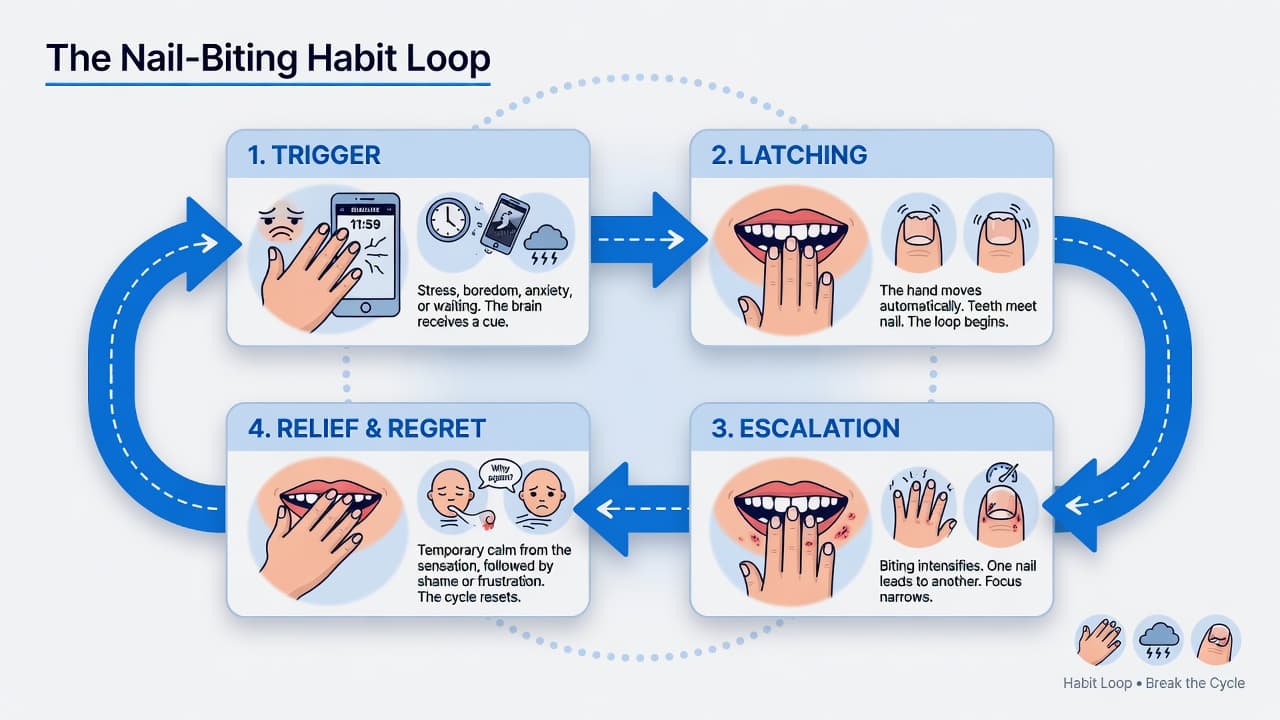
NBS™ is specifically engineered to interrupt the cycle at the latching phase. By creating a physical barrier that is difficult and unsatisfying to bite, it prevents the habit from progressing while simultaneously protecting and repairing the nails.
Why NBS™ Works Differently
Traditional approaches (bitter coatings, punishment, or simple awareness) often increase tension rather than reduce it. The Tanaka study itself recommends avoiding punitive tactics and instead focusing on motivation, self-esteem, and root-cause solutions.
NBS™ aligns with modern behavioral principles:
- It provides an immediate physical barrier
- It offers visual improvement and aesthetic confidence
- It supports long-term habit rewiring without shame or punishment
- The covers are 3D-printed from biomedical-grade resin for a natural, discreet look
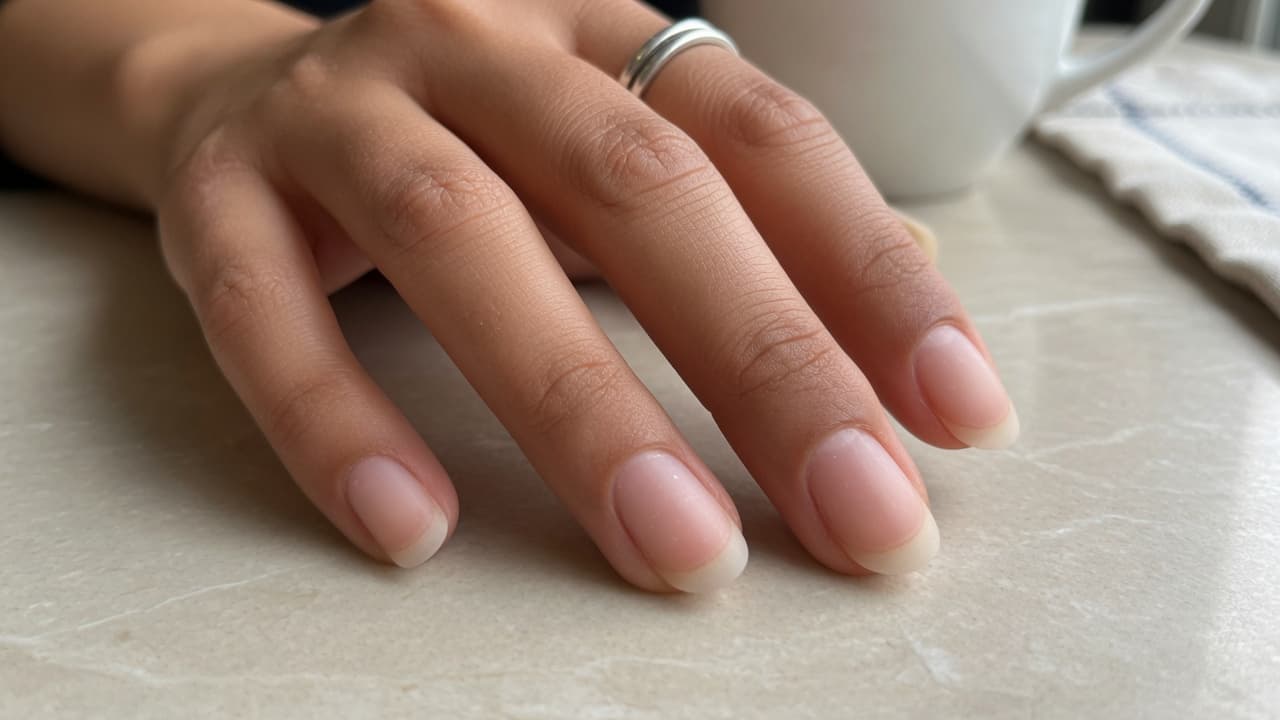
Many users report that others only notice the covers when pointed out. For the NBS team, applying NBS the night before important events restored confidence during a period when damaged nails were affecting our self-esteem.
A Practical Path Forward
Lasting change requires both desire and the right tools. NBS™ is designed to give nail biters a realistic, non-punitive way to interrupt the habit loop while their nails heal.
Even after someone successfully quits, we recommend keeping a kit on hand. Stress can trigger occasional slips, and having reliable covers ready can prevent a small setback from becoming a full relapse.
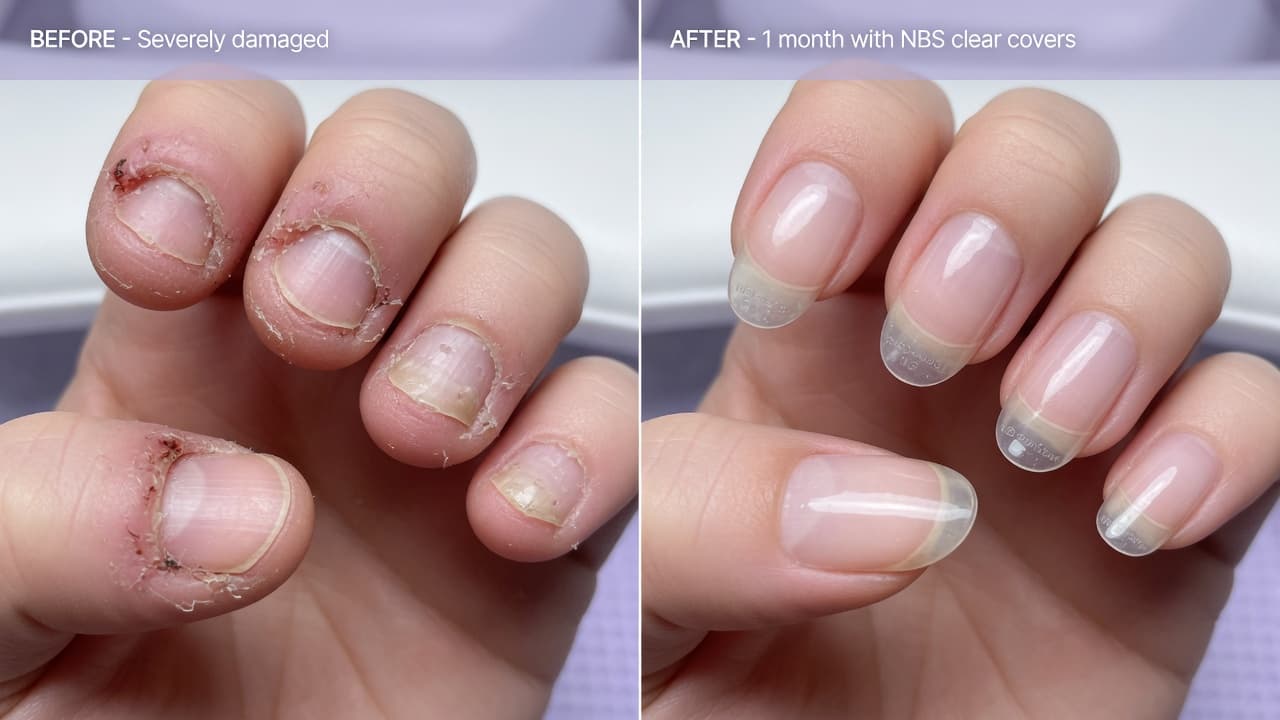
Ready to Break Free?
If you’re ready to interrupt the nail-biting cycle with a science-informed, practical solution, explore the NBS Universal Kit. It includes biomedical-grade covers, adhesive, and everything needed for application.
You can learn more and get started here: jtms.info/nbs.
Or reach out directly at shussain4@jtms.info with any questions.
Let’s redefine nail health — one habit at a time.
Best Regards,
The NBS Team, Nail-Biter Stoppers™ | JTMS NBS Series LLC | shussain4@jtms.info